Charlotte Mason’s Philosophy of Education Chapter 1: What Self-Education Really Means
Jun 02, 2026Charlotte Mason’s Philosophy of Education Chapter 1: What Self-Education Really Means
What if the most important part of education is not what we can put into a child, but what is already awakening within them?
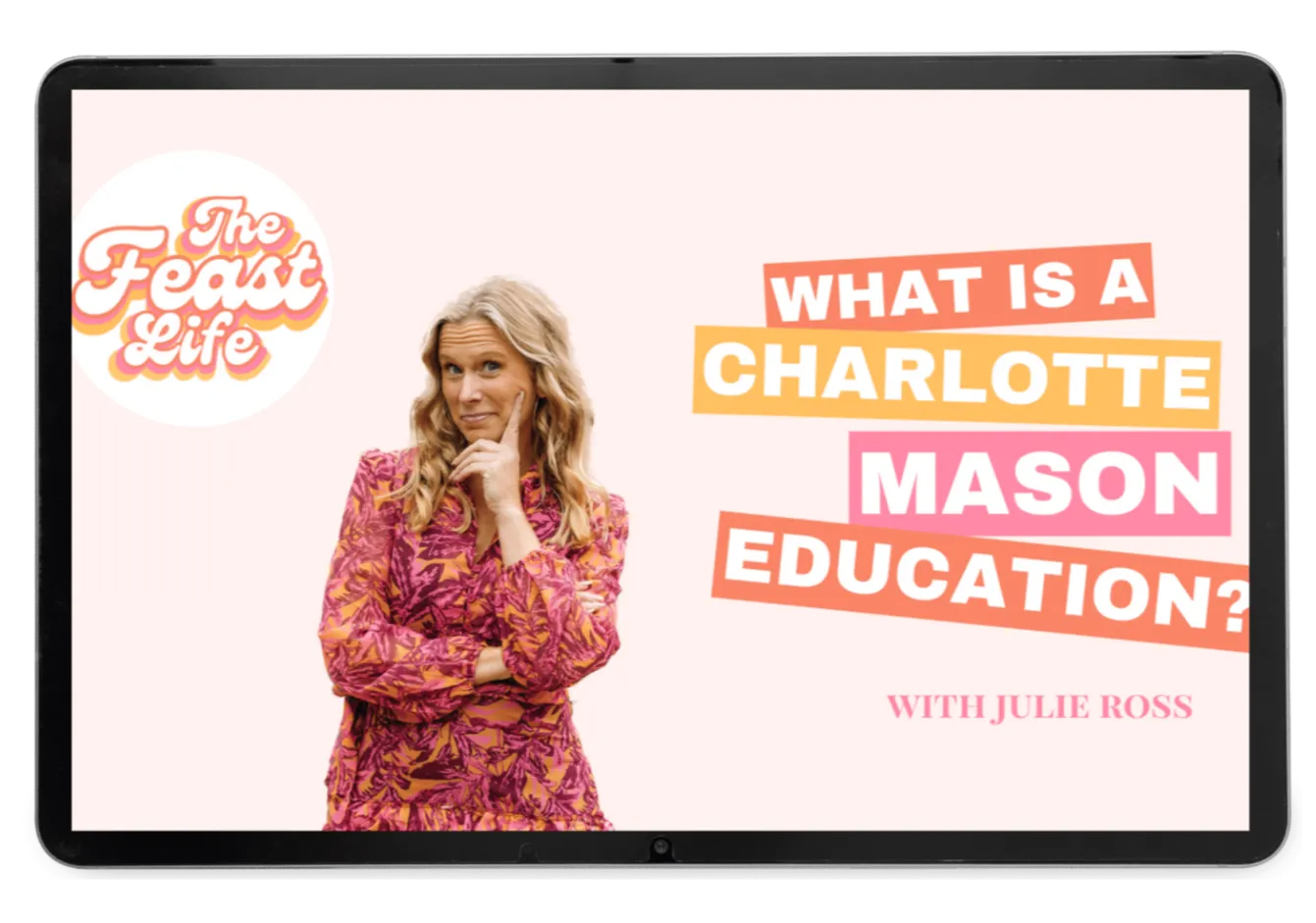
That is the powerful starting point of Chapter 1 in Charlotte Mason’s A Philosophy of Education. Her opening statement, “There is no education but self-education,” is one of the most quoted lines in all of her writings, and for good reason. It gets to the very heart of what makes a Charlotte Mason education so different from the teacher-driven, test-centered approach that many of us experienced ourselves.
At first, that phrase can sound a little confusing. It may even seem as though Charlotte Mason is saying that children are simply left on their own to figure everything out. But that is not her meaning at all. She is not removing the role of the teacher or parent. She is reminding us that real learning cannot be forced from the outside. It must be received, processed, and made personal within the child. True education is not something we do to a child. It is something that happens inside him as he meets living ideas and responds to them.
That truth is both challenging and incredibly freeing. It means our role as homeschool moms is not to cram our children with information or constantly prove that learning is happening. Our role is to spread a feast of rich ideas, cultivate attention and good habits, and trust that God has made our children capable of real growth.
Why Charlotte Mason Begins Here
Charlotte Mason starts her final volume with self-education because it is the foundation beneath everything else. Before she explains methods, schedules, books, or subjects, she wants us to understand the philosophy. If we miss this part, we may copy some of her methods without really grasping what makes them work.
That happens often in homeschooling. A parent may add living books, nature study, art, or narration to the day and still feel frustrated. Why? Because without the philosophy, the methods can quickly become just another checklist. They may look Charlotte Mason on the outside, but still feel teacher-heavy and performance-driven underneath.
Charlotte Mason is offering something deeper than a set of educational tools. She is offering a different way to see the child, a different way to understand learning, and a different way to approach our work as educators. She is asking us to believe that children are not empty containers waiting to be filled. They are persons with minds that hunger for ideas, hearts that can respond to truth and beauty, and souls capable of growth from within.
Once you begin to understand that, everything changes. The pressure starts to lift. The atmosphere begins to soften. The homeschool day can become less about pushing and more about guiding.
Education That Is Vital, Not Merely Decorative
One of the most striking ideas in this chapter is Charlotte Mason’s contrast between what is decorative and what is vital. She reminds us that a person is not built from the outside in. Character and conduct do not come simply from external activities, educational tricks, or polished output. Those things may look impressive, but they are not the same as inward formation.
That is a timely warning for us. In a world where so much of homeschooling can be made visible online, it is easy to believe that the most meaningful learning is the kind that looks pretty, feels productive, or produces something tangible by the end of the day. We can start to measure success by what is easy to display rather than by what is quietly taking root.
But some of the most important work in a Charlotte Mason education cannot be photographed. You cannot always capture growing attention, deeper empathy, richer vocabulary, moral imagination, or a child beginning to love knowledge for its own sake. Those things happen beneath the surface. They are not decorative. They are vital.
This is such good news for the homeschool mom who sometimes wonders whether enough is happening. If you spent your morning reading aloud, discussing a beautiful idea, listening to a narration, or walking outside together, real education may have happened in ways that no one else could see. Some of the deepest work of homeschooling is quiet work.
The Mind Feeds on Ideas
Charlotte Mason says that the mind is sustained by ideas just as the body is sustained by food. This picture is one of the most helpful in all of her philosophy because it reminds us what we are really offering our children each day.
We are not simply handing out assignments. We are feeding minds.
Just as a child needs nourishing meals rather than endless candy, the mind needs rich and living ideas rather than a steady diet of dry facts. Facts have their place, of course. Children do learn information in a Charlotte Mason education. But facts alone are not enough to produce wisdom, delight, or lasting ownership. Facts detached from meaning are often quickly forgotten. Ideas, on the other hand, take hold.
When a child encounters a living idea in a well-written book, a poem, a piece of art, a nature walk, a historical event, or a scientific observation, something deeper happens. That idea stirs thought. It sparks imagination. It begins to connect with other things the child already knows. It becomes personal. Charlotte Mason says that what a child digs for becomes his own possession, and that is exactly what we are after.
This is why a broad feast of subjects matters. Children need a generous spread of ideas from history, science, geography, literature, Scripture, poetry, music, art, and nature. Each subject offers its own nourishment. Each one helps the child build relationships with the world around him. Education becomes much more than information transfer. It becomes a science of relations.
Why Living Books and Narration Matter So Much
If the mind feeds on ideas, then it makes sense that the books we choose matter deeply. Charlotte Mason explains that when a child hears a vivid and well-told account, he is often able to narrate it back with surprising detail and even with original touches of his own. Why is that? Because he has truly engaged with it. He has pictured it inwardly. He has made contact with the ideas in the passage.
This is why living books are so central in a Charlotte Mason education. Living books are written by authors who know and care deeply about their subject, and whose writing carries ideas in a literary and memorable form. They do not merely summarize facts. They bring the reader into relationship with the people, places, and truths being studied.
Narration is the child’s natural response to that encounter. It is not busy work. It is not a quiz in disguise. It is the act of telling back what has been received, and that act does the real work of learning. Through narration, the child remembers, orders, selects, and expresses. He is not simply repeating words. He is processing thought.
This is also why dull books make narration so difficult. When a passage is flat, mechanical, or lifeless, there is little for the mind to take hold of. The child may struggle, not because narration is flawed, but because the material itself is not nourishing. Living books and narration belong together because they both assume that the child is a thinking person capable of making knowledge his own.
What This Kind of Education Produces
Charlotte Mason does not leave us guessing about the fruit of this approach. In this chapter, she lists several beautiful outcomes of a mind fed on living ideas. She says it secures attention, interest, and concentration. It develops a rich vocabulary. It supports purity of thought and life. It makes children delightful companions. It creates delight in books and cultivates a genuine love of knowledge.
That list alone is enough to make a homeschool mom pause and breathe deeply.
These are not shallow academic outcomes. These are the qualities many of us most deeply want for our children. We do not simply want them to perform well for a season. We want them to become thoughtful, articulate, curious, wise, and alive to the world. We want them to be the kind of people who can keep learning long after formal schooling has ended.
Charlotte Mason’s vision is so compelling because it reaches beyond grades and compliance. She is not satisfied with cleverness alone. She wants an education that forms the whole person. And in a world where children are often trained to chase rewards, pass tests, and jump through hoops, her vision feels both radical and deeply humane.
“I Am, I Can, I Ought, I Will”
One of the treasures in this chapter is Charlotte Mason’s famous motto: “I am, I can, I ought, I will.” These few words carry an entire vision of personhood and responsibility.
“I am” reminds the child of identity. “I can” speaks to capability. “I ought” points to moral responsibility. “I will” calls forth choice, intention, and determination. Together, they form a deeply empowering view of the child.
This is not about shallow self-esteem or empty positivity. It is about teaching children that they are real persons with God-given worth, responsibility, and power to act. It is about helping them understand that they are not passive recipients of life. They are capable of responding to truth, doing what is right, and exercising their will in meaningful ways.
What a gift to give our children in a world that so often leaves them unsure of who they are or dependent on outside validation. Charlotte Mason’s motto quietly roots them in identity, agency, and responsibility. It invites them to grow up with both humility and strength.
The Relief This Brings to Homeschool Moms
One of the most beautiful parts of this chapter is the relief Charlotte Mason says this philosophy brings to the teacher. She describes the difference as that between driving a horse that is light in hand and one that is heavy in hand. It is such a vivid picture, and any homeschool mom who has ever felt like she is dragging everyone through the day knows exactly what she means.
So much homeschool burnout comes from believing that we must do all the heavy lifting. We feel responsible to not only present the lesson, but also force attention, extract the right answers, prove progress, and keep everyone motivated at all times. That is exhausting. It creates tension in the atmosphere and discouragement in the heart.
But Charlotte Mason offers a different path. She reminds us that when children are given living books, meaningful ideas, and room to respond, the teacher does not have to carry the entire burden alone. We still lead. We still guide. We still require good habits and faithful work. But we are no longer trying to force life into lifeless lessons.
Instead, we become what Charlotte Mason calls a guide, philosopher, and friend.
That phrase alone is worth lingering over. What a beautiful way to think about our role as homeschool mothers. We are not simply task managers or academic enforcers. We are companions on the road, placing before our children what is true and lovely, then walking beside them as they grow.
The Long View of Education
One reason this chapter is so encouraging is that it helps us take the long view. A Charlotte Mason education does not always produce immediate, measurable results in the way modern systems expect. The fruit is often quieter than that. It may appear slowly, and sometimes only after years.
But that does not mean nothing is happening.
The ideas are going in. The feast is doing its work. Children often remember far more than we realize, and they frequently make connections long after we assume a lesson has passed. A story heard years ago, a biography once narrated, a line of poetry memorized in childhood, or a truth planted through repeated exposure may later emerge in a way that surprises us.
This is why trust is such an important part of this philosophy. We have to trust that living ideas have power. We have to trust that inward growth matters even when it cannot be measured immediately. And we have to trust that education is not wasted simply because it does not always look dramatic in the moment.
That kind of trust does not come naturally in a results-driven culture. But it is one of the greatest gifts Charlotte Mason offers us.
A Gentle Invitation to Consider
Perhaps one of the loveliest things about this chapter is that Charlotte Mason does not present her philosophy with harshness. She is not browbeating the reader with impossible standards. She is inviting us to consider another way.
Consider that children are persons.
Consider that the mind needs a generous feast of living ideas.
Consider that narration, living books, and meaningful relationships with knowledge may accomplish far more than drills, worksheets, and external rewards ever could.
Consider that your homeschool can be marked by peace, trust, and depth rather than anxiety, striving, and constant proof.
That is such a gracious invitation, especially for the homeschool mom who feels weary or unsure. You do not have to build your home education on fear. You do not have to force what can only truly grow from within. You can choose a more life-giving way.
Final Thoughts
Charlotte Mason begins A Philosophy of Education with self-education because this one principle changes everything else. It changes how we view the child. It changes how we choose books. It changes how we think about teaching. It changes the tone of our homeschool days. And perhaps most of all, it changes us.
It invites us to trust more deeply, to observe more carefully, and to remember that real education is not just the transfer of information. It is the awakening of a person.
That is a beautiful place to begin.
If you would like to follow along with our episode on A Philosophy of Education, make sure to download the new free Homeschool Feast App!
Stay connected
with news and updates!
Join our mailing list to receive the latest news and updates from our team.
Don't worry, your information will not be shared.
We hate SPAM. We will never sell your information, for any reason.
Hey there!